
‘Ministry as idolatry is one of the greatest traps of our time’
In an interview, Spanish pastor and journalist José de Segovia comments on the renewed spiritual interest among younger generations, the risks of social media, and the state of the evangelical witness in universities.
BENIDORM · 28 MAY 2026 · 15:04 CET
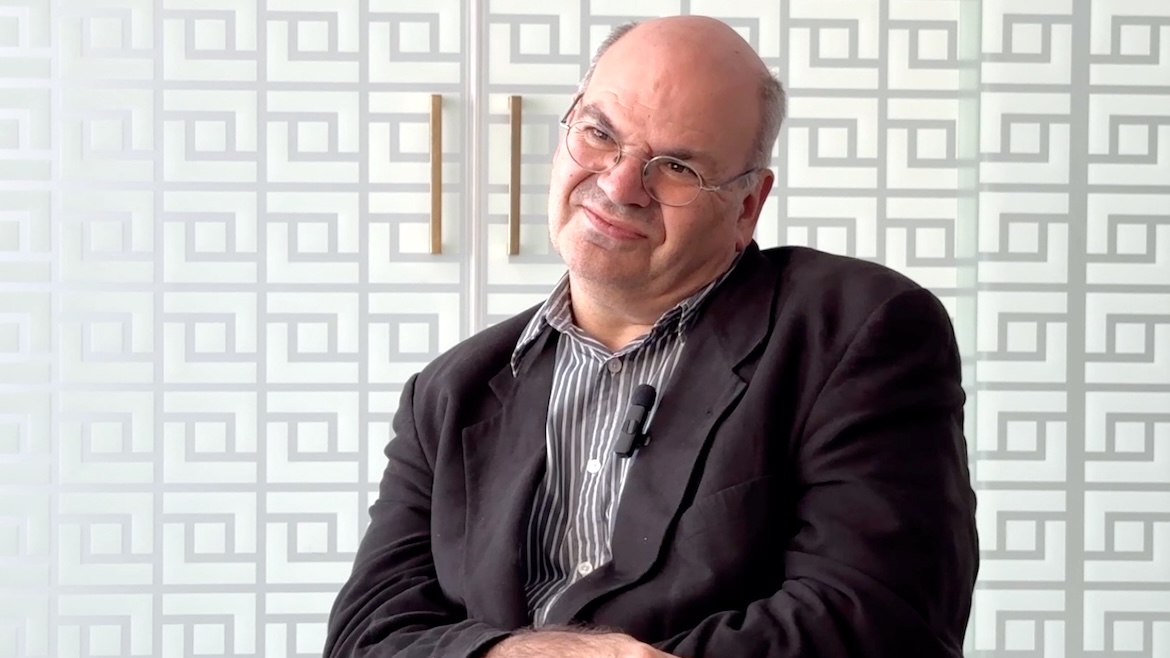
José de Segovia, a Spanish journalist and pastor, has engaged with culture from a biblical and faith-based perspective for decades.
Based on his extensive experience, he believes that the new generation, which is less religiously prejudiced than the previous ones, is asking questions that their parents dismissed categorically.
News website Protestante Digital spoke to de Segovia at the GBU Forum, a gathering attended by over 700 people from across Spain. It was a fitting setting to discuss generations, witness and culture.
All Evangelical Focus news and opinion, on your WhatsApp.
“The baby boomer generation in our country was immune to anything religious. Raised in Roman Catholic schools, tied to the church through initiation rituals, yet deeply sceptical, they were a generation that closed itself off completely, spiritually”, explains José de Segovia.
“The boomers in Spain were immune to anything religious. Raised in Roman Catholic schools, it is a generation that closed itself off completely”
De Segovia recently discussed this issue at a City to City Christian ministry gathering in Budapest, where preachers from several European cities came to the same conclusion: there is spiritual openness, but this is a generation with hardly any biblical knowledge.
For De Segovia, many young people in Europe “have no idea what the Bible is about, but they are interested”.
Trend or a genuine spiritual moment?
The question many ask when they see how some cultural figures in Spain are drawing closer to faith is whether this is a passing trend or something deeper.
José de Segovia believes that there have been other waves of spiritual openness in the past. Figures like pop star Rosalía are, in a way, the latest expression of phenomena such as that sparked by Madonna in the 1980s. However, he also sees signs of something more structural.
“We know God in Christ as the saviour of sinners. It would be a mistake to reduce Him to an undefined spirituality”
“We preach and know God in Christ as the Saviour of sinners. It would be a mistake to reduce everything to the ambiguity of an undefined spirituality”, he warns.
He therefore finds conversion stories such as ex football star Dani Alves’ more familiar than surprising, because “evangelical conversion has always occurred among non-spiritual people. God comes to save sinners”.
The trap of ministry as an idol
During the conversation, José de Segovia addresses the issue of ministry turning into idolatry.
Social media has amplified a dynamic that already existed, but has taken it to a new level. The worrying thing, he stresses, is that it affects all sectors of the evangelical world.
“There are many people eager for sound doctrine who only think about whom they are going to attack this week and what heresy they could find”
But the problem isn’t just that preachers chase views and followers with motivational messages. For José de Segovia, “there are many people eager for sound doctrine who only think about whom they are going to attack this week and what heresy they can find. To me, that seems just as worldly as the other approach”.
He adds that both attitudes reveal the same trap: “Your satisfaction comes from how many views you’ve had, how many have fallen for the clickbait”.
Likewise, from the perspective of the victimising prophet who says 'everyone is against me because I defend the truth', the mechanism is the same: the ministry becomes a mirror in which one contemplates oneself instead of serving God.
Witnessing at university, a work in progress
De Segovia recalls that his participation in the University Bible Groups (GBU, IFES movement in Spain) during the Spanish political transition was pivotal, in a context where "no one could predict that there was any future in that movement".
Today, decades later, the work has flourished in a way that then seemed unimaginable. Over 600 students meet over 35 university campuses.
"It is crucial to reach all these young people in a period of openness unlike anything we have probably seen before"
However, he also mentions the pending issue of the evangelical presence in secondary schools, institutes, the work among adolescents. "It would be crucial to reach all these young people who are in that period of openness unlike anything we have probably ever seen before", he concludes.
At a time when a generation is asking questions that their parents never asked, it is crucial that they receive answers.
Do you see a need for this kind of journalism?
Through news, interviews, opinion and analysis, we seek to build bridges between evangelical churches and the societies in which they live.
As a non-profit entity, the big challenge is to be sustainable, month by month. We invite you to make a difference! Join the readers who make Evangelical Focus possible.
Published in: Evangelical Focus - life & tech - ‘Ministry as idolatry is one of the greatest traps of our time’