
Italy and Chile spearhead initiative to abolish surrogacy globally
Governments around the world need to ask themselves if “human beings can become a means to satisfy the interests and desires of others”, says Italy's Minister for Family and Natality.
GENEVA · 02 JULY 2026 · 10:11 CET
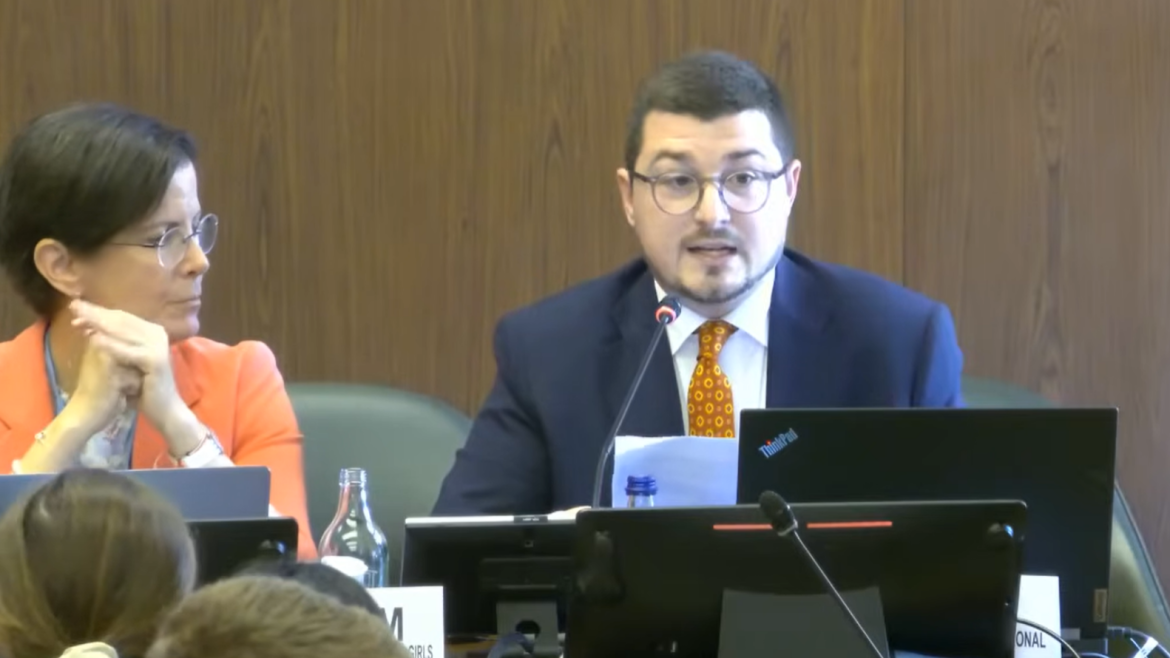
The governments of Italy and Chile have released a political declaration calling for an international moratorium on surrogacy.
The ultimate aim is to work towards a legally binding instrument that could abolish surrogacy through international law.
All Evangelical Focus news and opinion, on your WhatsApp.
Serious risks
The declaration warns that surrogacy involves human rights violations and abuses, especially the commodification of human life and women’s reproductive capabilities. It harms children by “the deliberate separation from the women who carried and gave birth to them”.
It also stresses that women and girls in surrogacy are at risk of “serious medical issues, coercion, exploitation and loss of agency, risks that fall disproportionately on vulnerable women and children with limited access to effective remedies”.
Furthermore, the signatores are concerned about the “potential psychological, emotional, and identity-related impacts as well as complex legal challenges relating to parentage, nationality, and legal protection, and risks of abandonment, human trafficking, and exploitation”.
“Are human beings a means to satisfy the interests of others?”
The declaration was presented at a side event of the 62nd session of the UN Human Rights Council, co-hosted by the governments of Italy, Chile, Cameroon and the Holy See, and moderated by ADF International.
“Surrogacy is no longer a matter confined to domestic legislation or individual choices. It has become a global phenomenon, increasingly shaped by international markets, cross-border arrangements, and profound inequalities within and between societies”, said Eugenia Roccella, Italian minister for Family, Natality and Equal Opportunities during the event.
For Roccella, policy-makers, “have a responsibility to ask a fundamental question: do we still recognise every human being as a person to be respected, or are we willing to accept situations in which human beings can become a means to satisfy the interests and desires of others?”.
Felipe Kipreos Palau, Director of Human Rights at Chile's ministry of Foreign Affairs, warns about the “regulatory gaps” created by the “divergent national frameworks” that may “spread risks across jurisdictions”.
That is why the Chilen minister called for “an enhanced international cooperation, and for conversation grounded in the best interests of the child and the dignity of every person involved”.
UN Special Rapporteur agrees
Shortly after the launch of the declaration, Reem Alsalem, the UN Special Rapporteur on violence against women and girls, presented a separate report to the UN Human Rights Council, pointing out that surrogate mothers are at particular risk of violence.
Alsalem supported the declaration, stating that it “shows that policy action is possible”.
“The states that are joining the declaration today recognise that surrogacy raises fundamental concerns relating to human dignity[…] and that fragmented national approaches will facilitate the growth of a global cross-border market that transfers harm onto women and children in more vulnerable jurisdictions”, uderlined the UN Special Rapporteur.
Surrogacy bans worldwide
Italy became the first country to prohibit surrogacy both within and outside its borders in 2024.
The European Parliament voted that year a resolution which defined surrogacy a form of human trafficking.
In September 2025, Slovakia adopted a constitutional amendment prohibiting the practice.
Meanwhile, in January 2026, the Family, Childhood and Adolescent Commission of the National Congress of Chile advanced landmark legislation that would prohibit surrogacy.
Do you see a need for this kind of journalism?
Through news, interviews, opinion and analysis, we seek to build bridges between evangelical churches and the societies in which they live.
As a non-profit entity, the big challenge is to be sustainable, month by month. We invite you to make a difference! Join the readers who make Evangelical Focus possible.
Published in: Evangelical Focus - life & tech - Italy and Chile spearhead initiative to abolish surrogacy globally