
Conspiracy theory about CIA and the evangelical growth in Latin America resurfaces
Some political scientists and social media influencers claim that the evangelical growth in Latin America and Spain is part of a US intelligence operation, but academic research refutes it.
20 OCTOBER 2026 · 16:11 CET
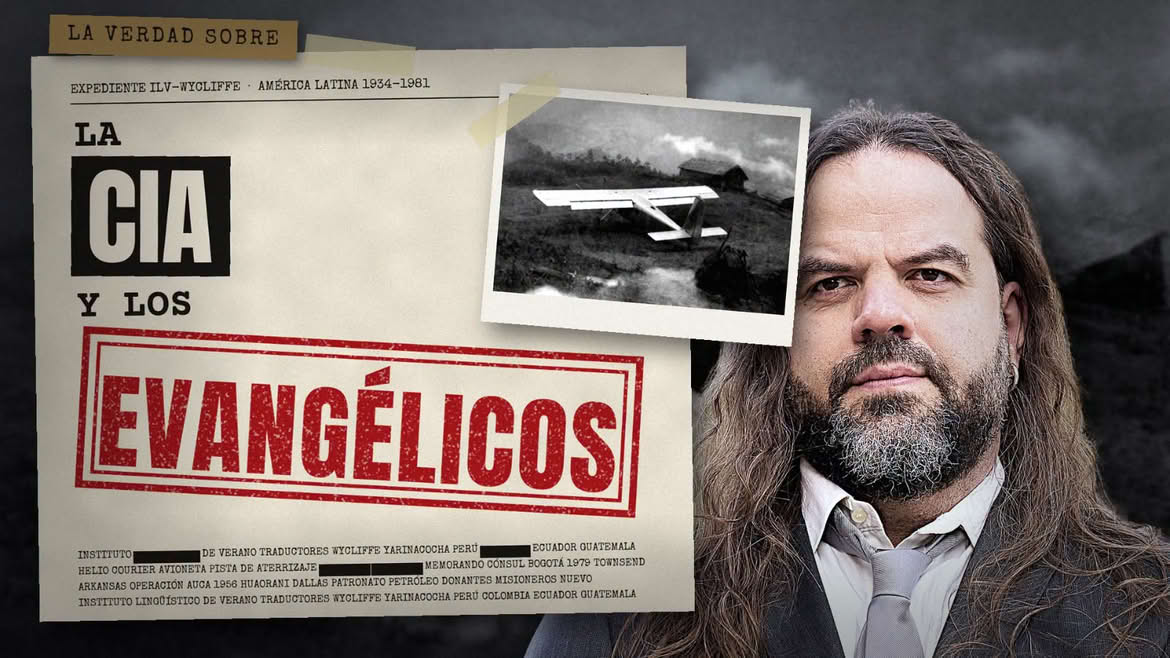
In recent weeks, a growing trend has emerged on social media and YouTube, claiming that the evangelical growth in Latin America is the result of a strategy designed and funded by the CIA during the Cold War, which also extends to evangelical churches in Spain.
One of the main advocates of this theory is the political scientist Santiago Armesilla, who called for the expulsion of evangelicals from Spain on the X social media platform earlier this month.
He recently released a video on his channel entitled "The CIA and evangelical Christianity: How they converted the indigenous peoples of Latin America".
All Evangelical Focus news and opinion, on your WhatsApp
While declassified documents confirm Washington's interest in religion in Latin America during the Cold War, they do not support the narrative of a CIA-created evangelical faith, let alone provide grounds for questioning the place of evangelicals in Spanish society.
Who is spreading and promoting that message?
Armesilla is the general secretary of the cultural association Vanguardia Española and has 250,000 subscribers on YouTube. His hostility towards Protestantism is not new.
In March, he published an article in which he claimed that the known as Abrahamic Accords are uniting Zionist Jews, evangelical Christians and Salafists, whom he accused of contempt for the body and for women, as well as a lack of hierarchy and tradition. He called for an alliance of Catholics, Orthodox Christians, and Shias to oppose them.
At the beginning of October, the social media influencer even went as far as to say on X that “evangelical churches must be expelled from Spain. Evangelicals must be expelled from Spain. They are the Trojan horse of Anglo-Zionism”.
Las Iglesias Evangélicas deben ser expulsadas de España. Los evangélicos deben ser expulsados de España. Son caballo de Troya del anglosionismo.
— Santiago Armesilla (@armesillaconde) October 5, 2026
Some media outlets have also echoed this argument. Last year, a Spanish website claimed that the evangelical growth in Spain is the result of Latin American immigration, and that the CIA played a decisive role in spreading and funding evangelism across the continent.
A Cuban media outlet now states that the CIA funded evangelical missions, trained pastors, promoted media outlets, and created networks of churches across the continent, without providing any concrete evidence.
What the ‘Rockefeller report’ does not say
The key element of this theory is the report that Nelson Rockefeller submitted to Nixon in 1969, which is said to have recommended replacing Catholics with “other types of Christians”.
However, David Stoll, the anthropologist and author of the seminal work on the subject Is Latin America Turning Protestant?, points out that the report only warned that the Catholic Church was vulnerable to subversive infiltration, and it did not call for an evangelical campaign to undermine it, as is often alleged.
However, it did reflect that Washington was losing confidence in Catholicism as a bastion against communism.
Something similar applies to the so-called Santa Fe Papers (1980), often referred to as 'CIA documents'. These were not written by the CIA, but by conservative advisers associated with the private think tank, the Council for Inter-American Security.
Content of the declassified files
The CIA documents that exist and can be consulted in its digital reading room primarily focus on the Catholic Church.
In July 1969, the National Security Council commissioned the CIA to carry out a country-by-country analysis of the Church in Latin America, including the roles of foreign clergy, non-Catholic groups, and missionaries.
The main finding of the study, according to the summary Kissinger sent to the President, was that the Latin American Catholic Church had shifted from defending the established order to promoting social change. These are analytical documents and do therefore no include orders to fund churches.
The CIA and religion
The relationship between the CIA and some religious personnel did exist and was investigated by the US Senate.
In 1976, the Church Committee reported that the CIA had acknowledged 14 covert agreements involving the direct operational use of 21 religious figures, from all denominations and regions of the world. The CIA also paid salaries or expenses and helped to fund projects in six or seven cases.
Protests from the churches themselves led to the adoption of regulations in 1977 prohibiting the CIA from having any intelligence-related dealings with American clergy or missionaries.
The National Association of Evangelicals of the Unites States has demanded that its missionary agencies avoid any involvement with the intelligence services.
Isolated cases of collaboration or political use of religion do not constitute an operation large enough to convert tens of millions of people.
Growth with its own roots
Stoll recalls that many evangelical groups had worked for decades prior to the significant growth, and that the Catholic Church also received substantial funding from abroad, including North American and European dioceses and organisations such as Caritas, Adveniat and Misereor.
In 1983, the Latin American Catholic bishops agreed to imitate evangelical methods, encourage Bible reading, and open up more opportunities for lay participation while recognising internal pastoral issues.
Other studies coordinated by Stoll and Virginia Garrard-Burnett examine the phenomenon country by country and categorically reject the conspiracy theory.
In an interview with Latin American news website Evangelico Digital, the historian César Vidal said that these speculations are an "absolute lie".
He explained that the first Protestants in Latin America came from Germany and arrived in Venezuela in the 16th century. They were persecuted by the Inquisition, and the evangelical presence surged again with the emancipation of the Spanish colonies, which allowed the arrival of evangelical traders, colporteurs and missionaries.
All this took place centuries before the CIA was established in 1947.
Since the 16th century
In Spain, the Protestant or evangelical faith has been present in one form or another (sometimes only marginally, but never entirely absent) since the beginning of the Protestant Reformation; despite initial persecution and later represion and intolerance.
Today, it continues “under the dual attack of atheistic and anti-religious ideologies on the one hand, and ultra-Catholics and conspiracy theorists on the other”, underlined Vidal.
According to the Observatory on Religious Pluralism, an official governmental body in Spain, the number of evangelical places of worship rose from 2,944 in 2011 to 4,763 in September 2025, largely due to Latin American immigration.
Furthermore, there has been a significant impact within the Romani community since the 1960s, as the Filadelfia church is now the largest denomination with around 1,000 places of worship.
Do you see a need for this kind of journalism?
Through news, interviews, opinion and analysis, we seek to build bridges between evangelical churches and the societies in which they live.
As a non-profit entity, the big challenge is to be sustainable, month by month. We invite you to make a difference! Join the readers who make Evangelical Focus possible.
Published in: Evangelical Focus - world - Conspiracy theory about CIA and the evangelical growth in Latin America resurfaces